The site is currently undergoing maintenance. We apologize for the inconvenience.


- Home
-
For students
- Class schedule
- Class Schedule
- Employment
- Student self-government
- Student Organizations
- Student Committee
- Elective Courses
- Instructions
- Campus Building Plan
- Non-formal education
- Student Science
- Practice
- Department of Military Training
- Tuition and dormitory fees
- Moodle educational platform
- Instructions
- PS - Performance Journal
- For applicants
- Activities
- About NUWEE
At NUVHP, they studied the growth rates of the giant freshwater shrimp.
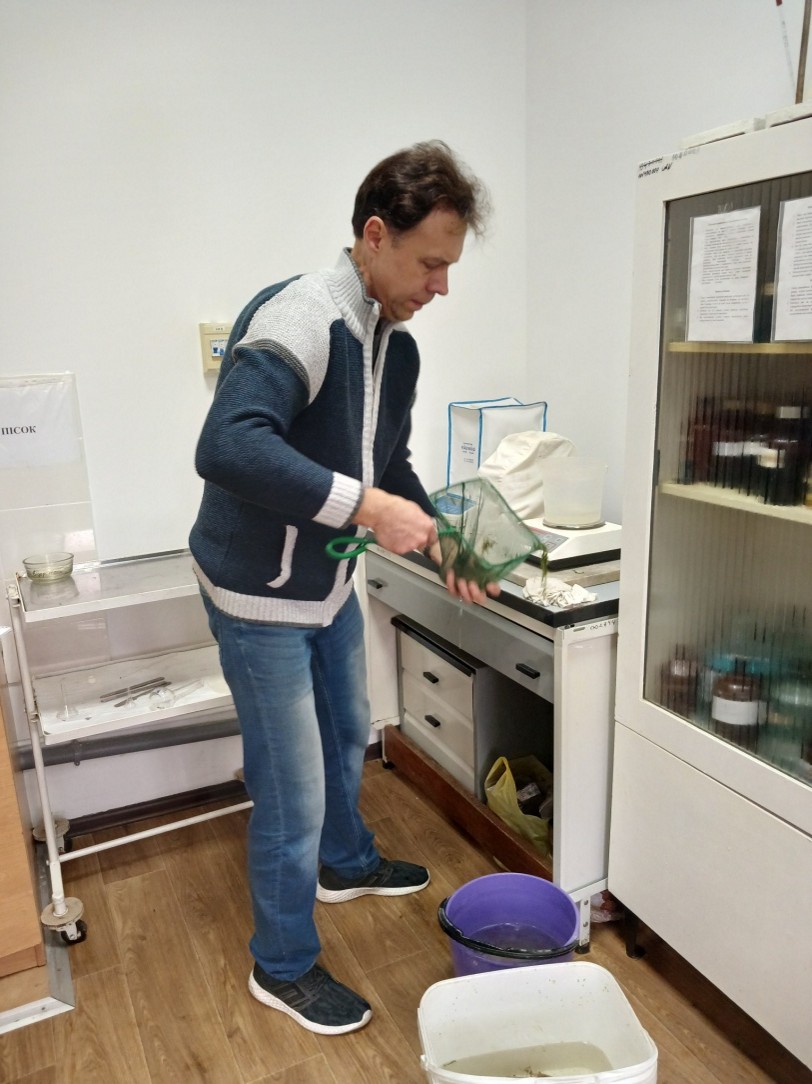
In the integrated multi-trophic aquaculture laboratory, which was established at NUVGP with EU funding as part of the Erasmus+ grant project AFISHE, the growth rates of the giant freshwater shrimp were investigated.Macrobrachium rosenbergii)Shrimp cultivation took place in a RAS laboratory system, with a water recycling purification block developed according to the concept of integrated multi-trophic aquaculture.
Mostly, the product of crustaceans in food establishments and markets is imported; however, Ukraine has the potential to cultivate its own aquaculture products. Currently, there is a high level of interest among many entrepreneurs in Ukraine in developing the technology for cultivating Macrobrachium shrimp in RAS conditions. Economic indicators are also important, as maintaining an adequate temperature regime and providing shrimp with complete feeds are necessary for rapid growth rates. Therefore, effective purification of contaminated water in RAS systems will allow minimizing heat losses and reducing the specific water consumption per unit of cultivated product.
Equally relevant is the problem of providing shrimp with quality feeds that must contain all the components necessary for growth, be balanced, and easily digestible. Despite numerous reports of excellent results in shrimp cultivation in household farms in Ukraine when feeding them self-prepared mixtures (vegetables, greens, fish, grains, etc.), for cultivating Macrobrachium in full-fledged RAS, we believe that a more rational approach is to use specialized granulated feeds. Therefore, a compound feed from the domestic producer of aquaculture feeds 'Fishery.tech' was used for feeding. A memorandum of cooperation between this company and NUVGP was signed on January 21, 2025. The research results confirmed the proper growth rates of shrimp when using such feeds and the high efficiency of pollution removal using the biological purification technology.
In the future, it is planned to expand cultivation volumes to study the main technological parameters of shrimp cultivation under semi-production conditions.